01

Wearable training platform
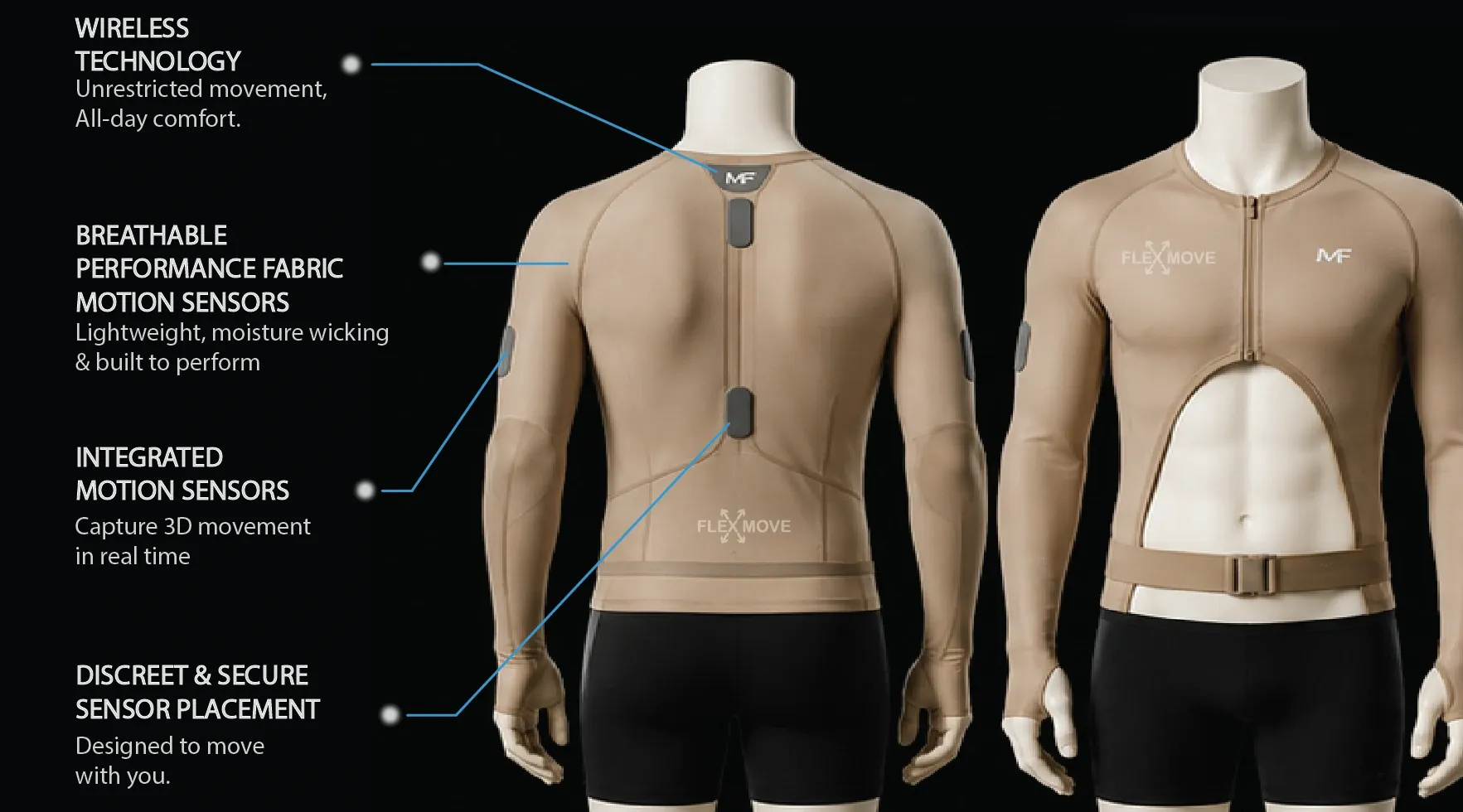
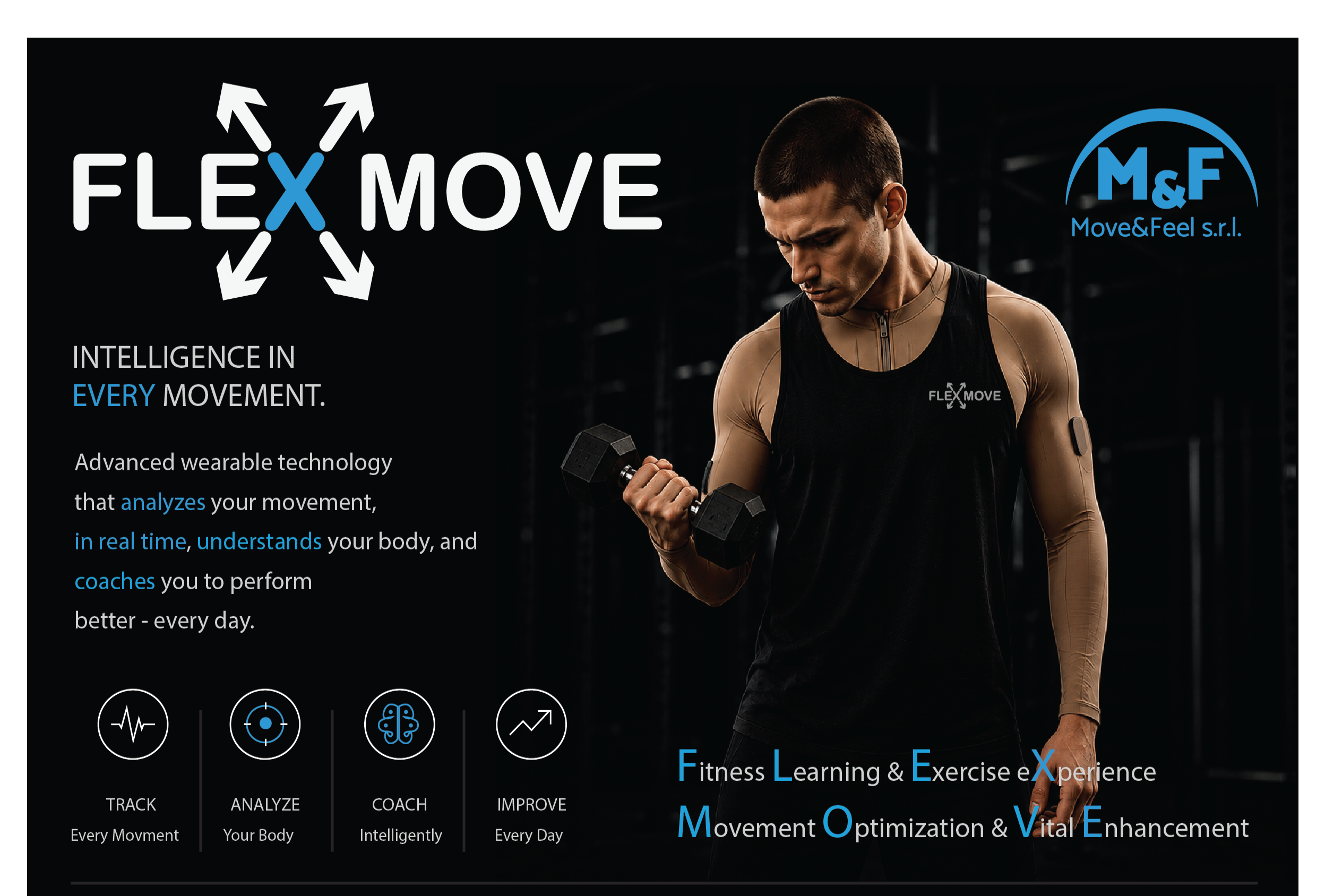
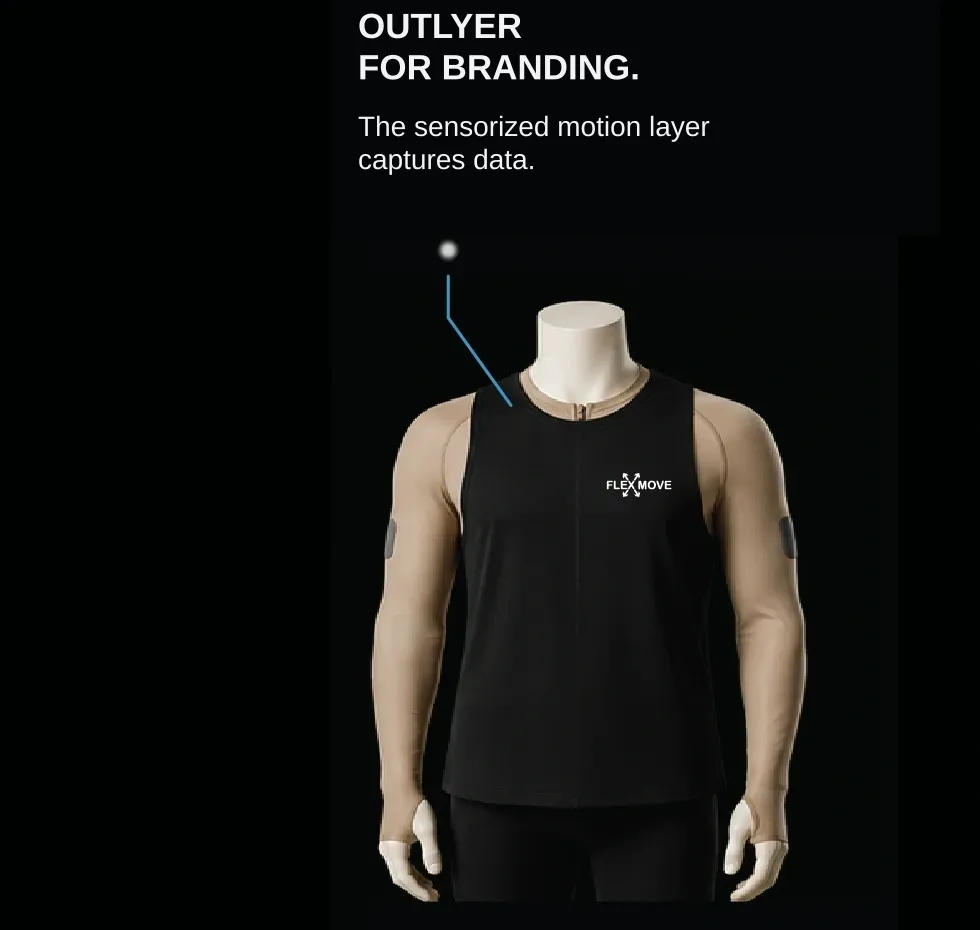
FLEX-MOVE combines garment-embedded sensors, real-time AI analysis, and adaptive coaching to make every exercise session more effective and measurable.
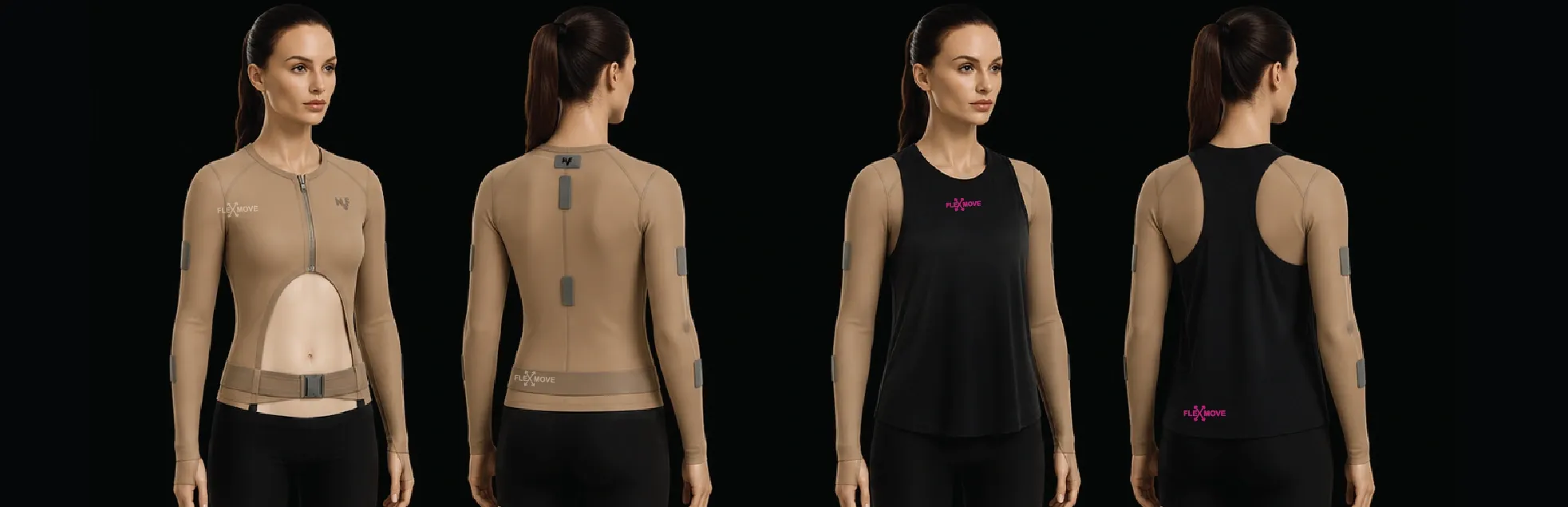
Smart clothing system
01
02
03

04
05
How it works
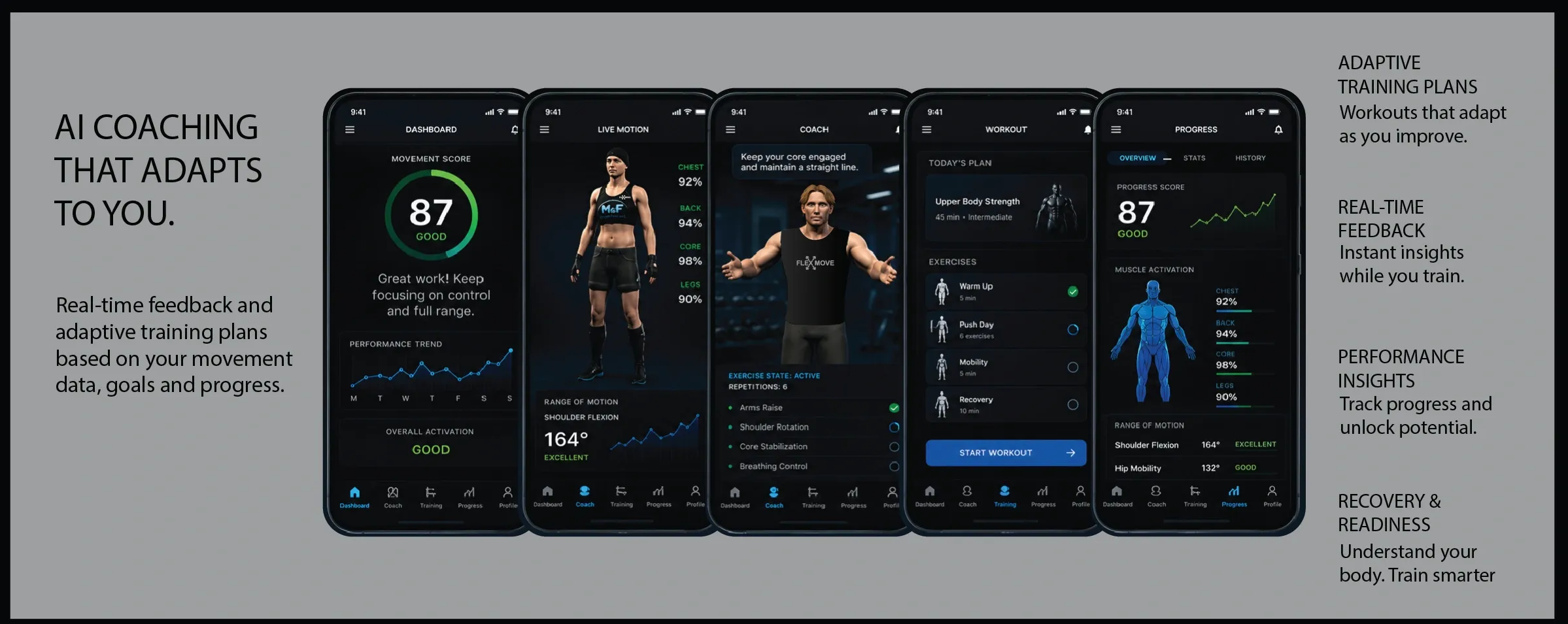
FLEX-MOVE unifies AI-driven exercise analysis, live workout guidance, and performance reporting in a single software experience. The same platform interprets movement, coaches the user in real time, and turns every session into readable progress data.
Unified software platform
A connected product that combines AI, workout execution, motion tracking, and post-session statistics — all in one software without fragmenting the experience.
Sensor data, AI interpretation, and user-facing feedback stay inside one continuous loop, so the platform can react during the exercise and summarize performance right after it ends.
Automatic exercise analysis, personalized coaching logic, and content generation operate as one decision engine behind each session.
The platform guides the user through the training session with instant cues, visual reference indicators, and responsive coaching during movement execution.
Every workout feeds scoring, movement quality tracking, and session statistics that help appreciate progress and project achievable goals over time.
Real-time session engine
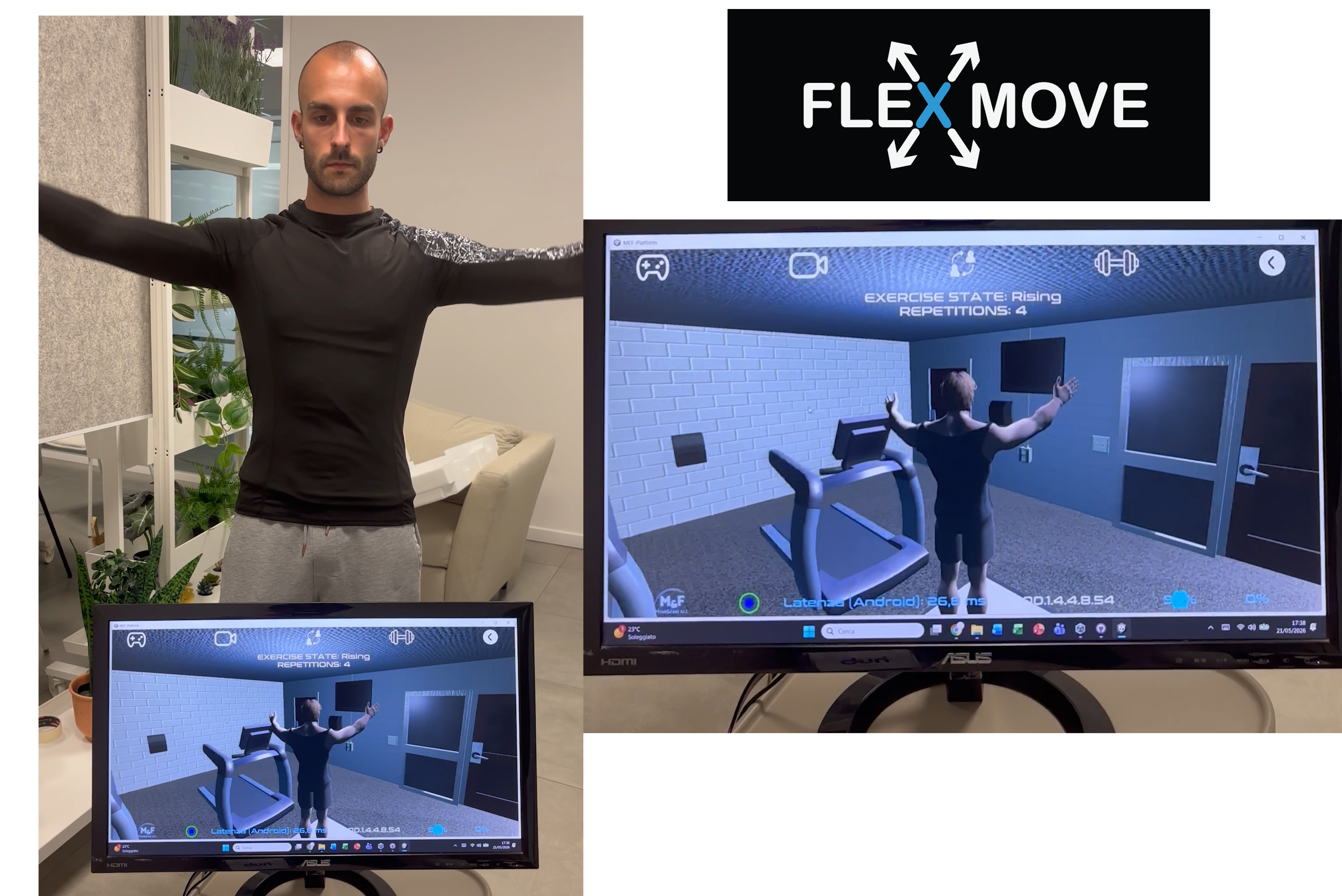
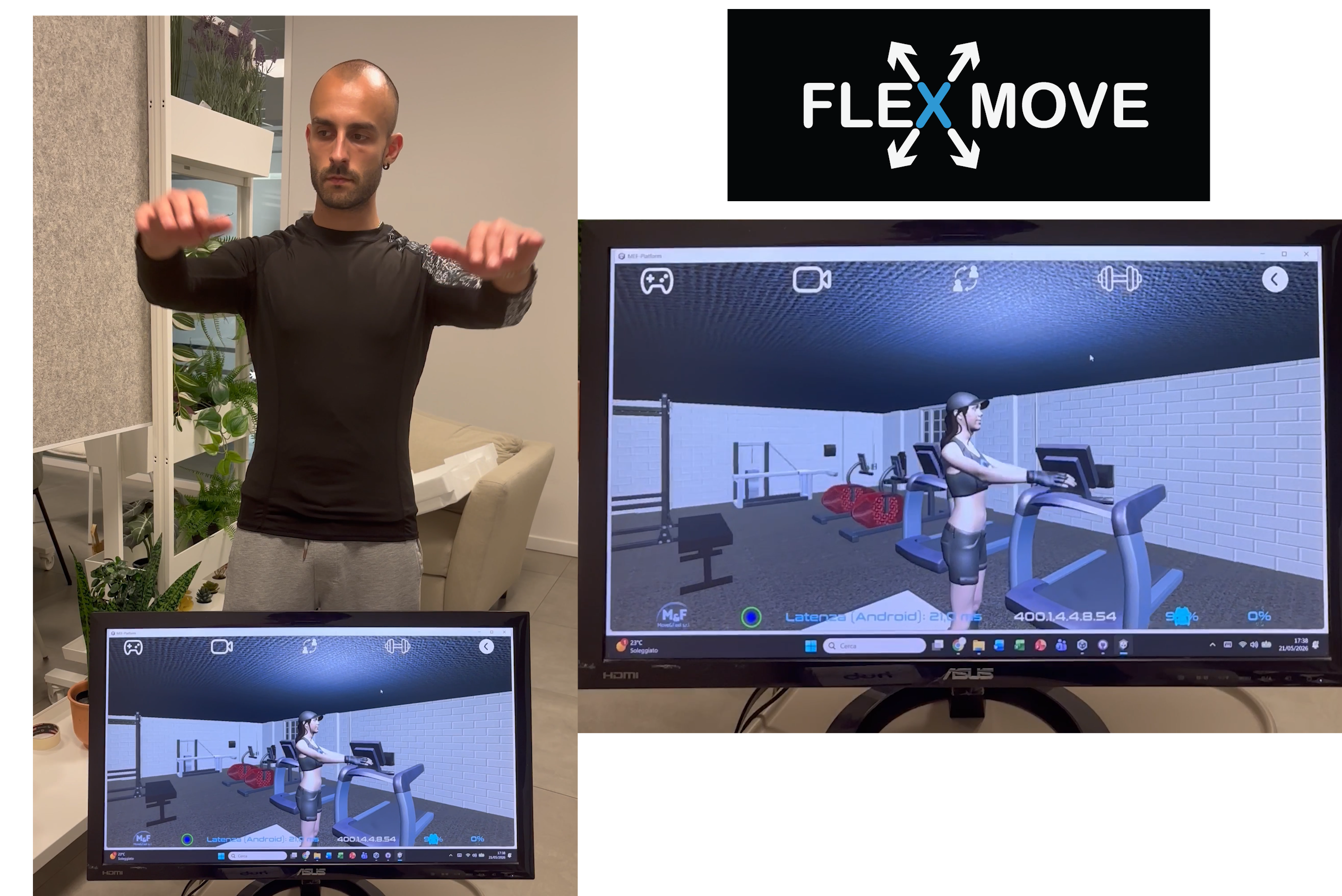
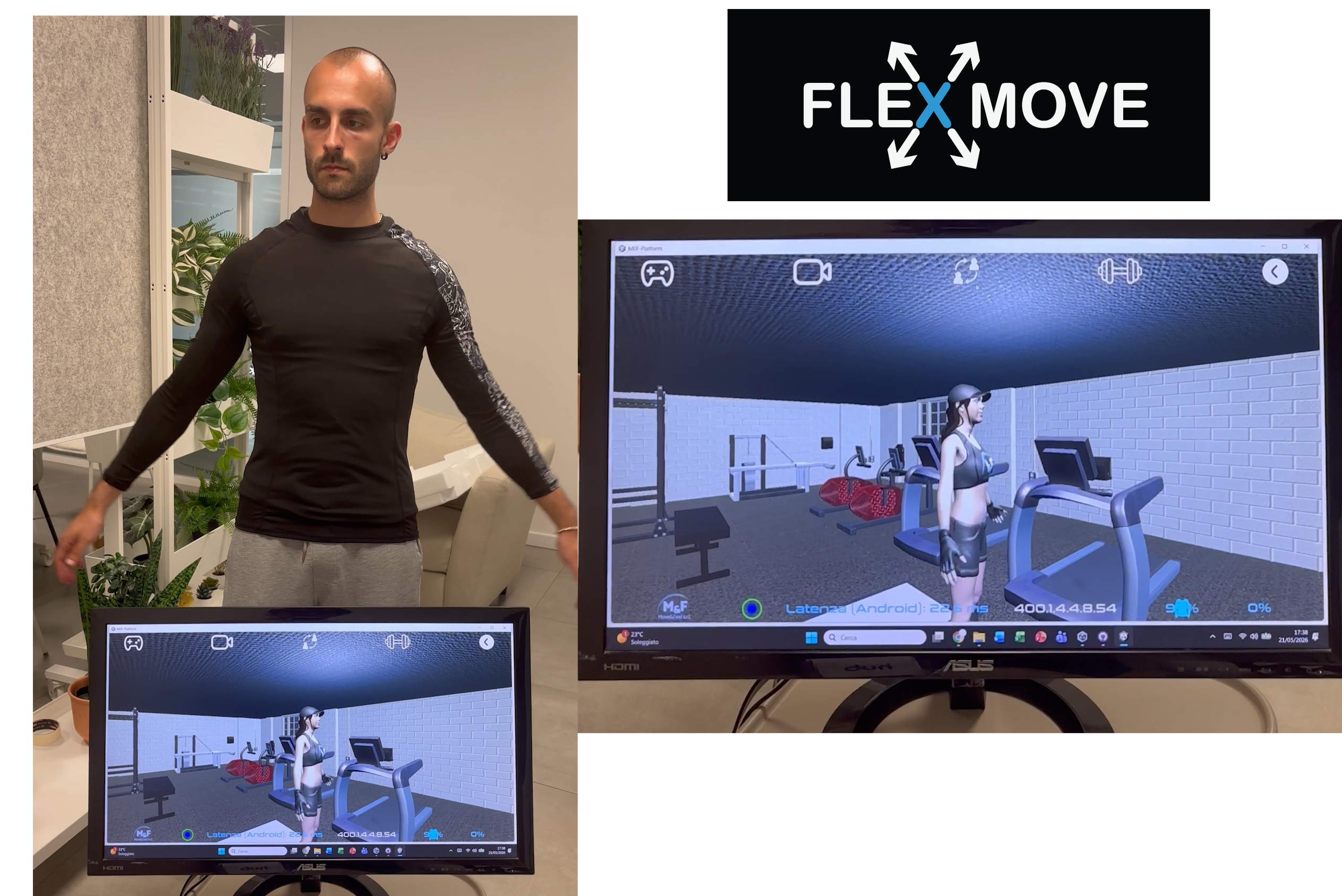
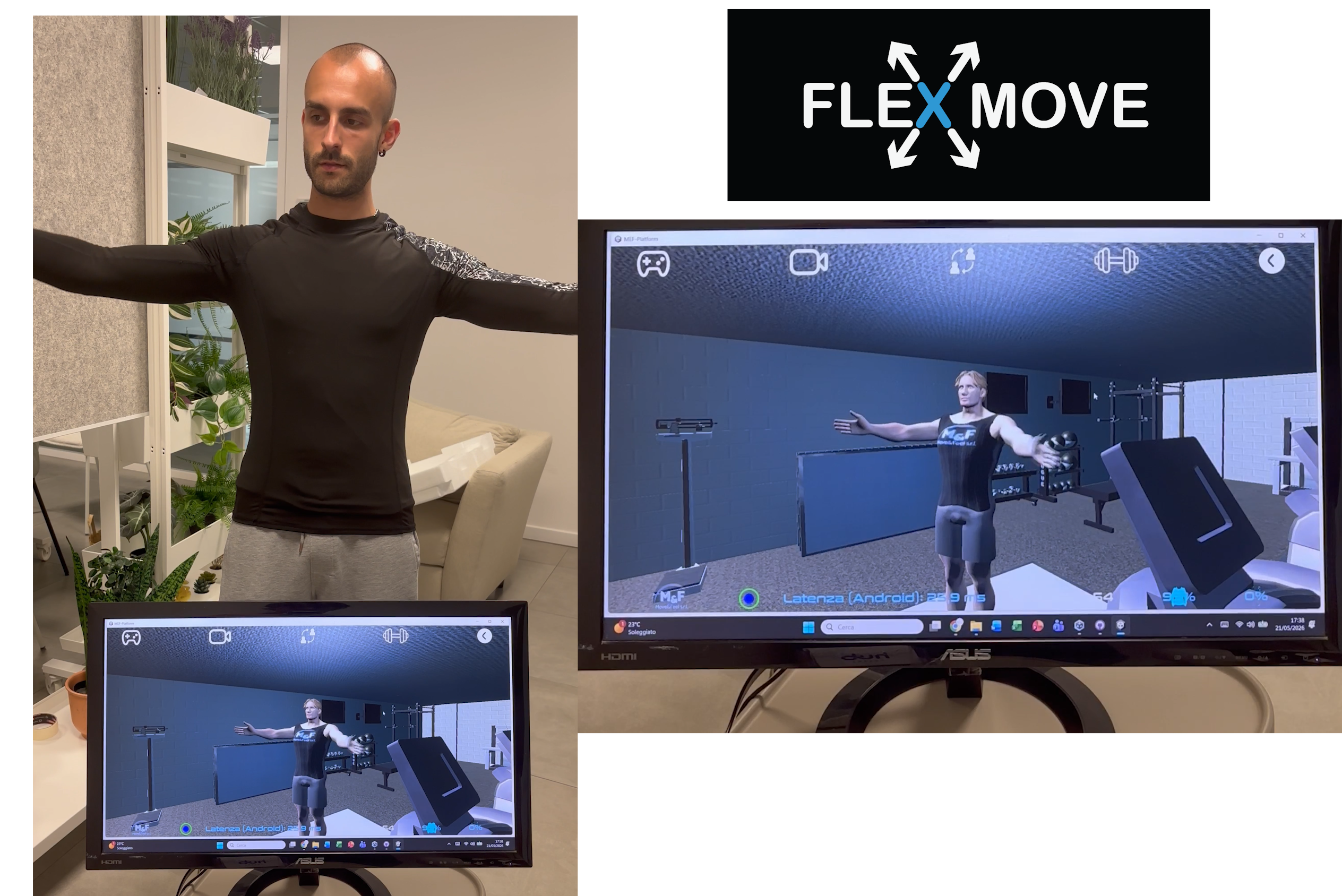
These exercise execution phases show the user with FLEX-MOVE following the virtual coach's guidance during a real exercise session. The monitor displays the 3D avatar during motion tracking. At the top, the number of completed repetitions and corrective feedback for proper posture are shown.
Real motion-tracking phases
KPI and scoring engine
FLEX-MOVE reconstructs the exercise in real time and translates raw joint tracking into technical KPIs that are immediately available.
Counts the repetitions completed during exercise execution with form validation.
Measures how long the target musculature stays under load for each repetition and each completed set.
Measures joint angular displacement during exercise, deriving the minimum and maximum angle reached.
Compares left and right side movement patterns to detect compensation strategies, asymmetries, and side-to-side imbalances.
Evaluates postural control during static and dynamic phases, highlighting loss of balance or segment drift.
Monitors skeletal alignment against the reference posture and flags deviations of the spine, shoulders, pelvis, and other critical segments during exercise execution.
Measures movement velocity during the concentric and eccentric phases of exercise execution.
Acts as a meta-metric for system reliability, indicating signal consistency and the confidence level of the reconstructed movement.
Estimates energy expenditure by combining movement execution intensity, session duration, and anthropometric variables.
The overall score aggregates all KPIs into a single normalized evaluation, prioritizing movement accuracy, control, repeatability, and signal reliability.
Training modes
With FLEX-MOVE you can frame each training session around clear objectives.
RiminiWellness 2026
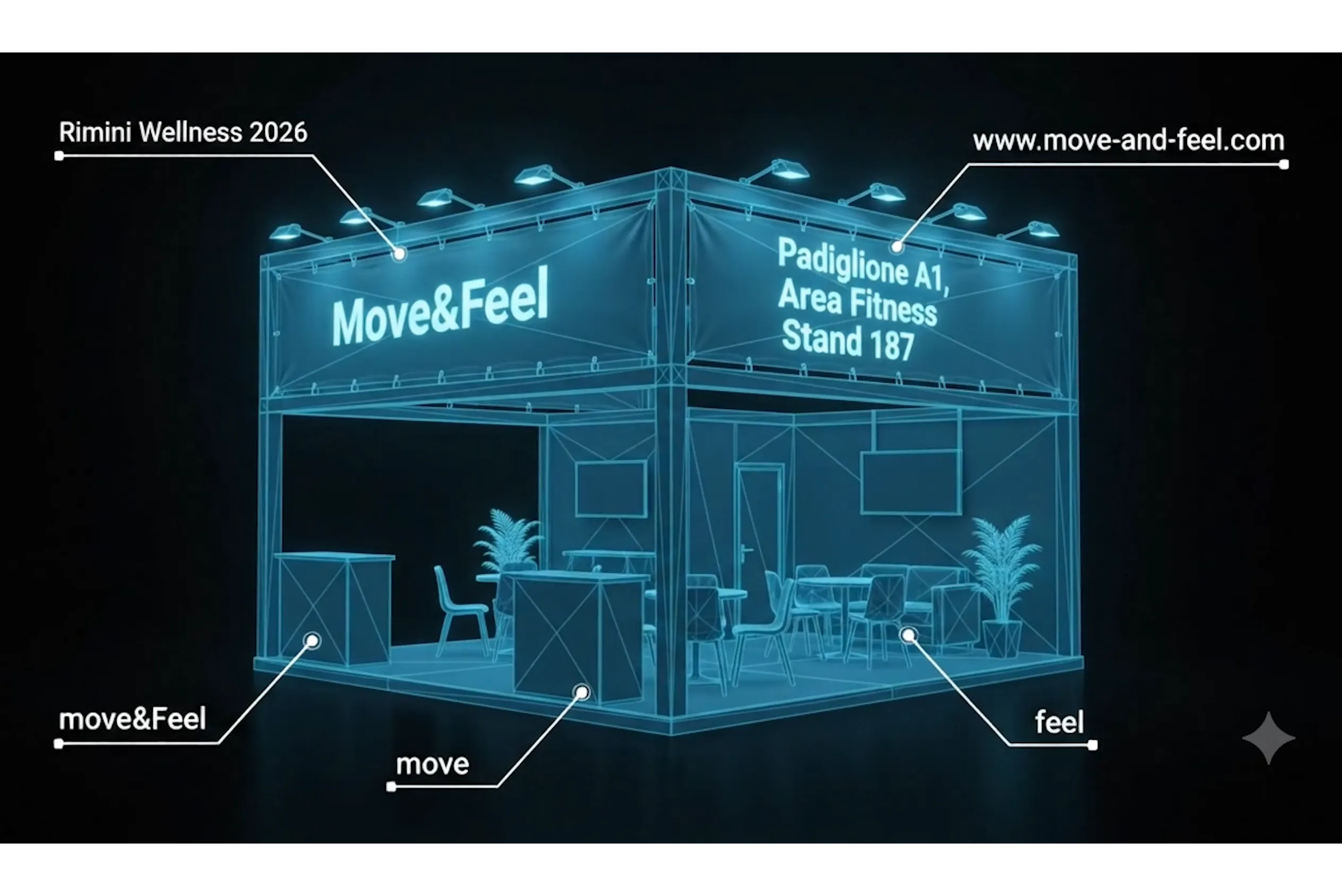
Move&Feel will present a demo of the FLEX-MOVE prototype at RiminiWellness 2026, bringing its guided training concept into one of Europe's best-known wellness and fitness trade events.
Watch the teaserDates
28-31 May 2026
Location
Fiera di Rimini / Italian Exhibition Group
Edition
20th edition
Hours
9:30-19:00, Thursday to Sunday
Move&Feel context
The Rimini presentation is centered on the FLEX-MOVE prototype: a smart garment with a digital training system designed to offer guided movement, exercise feedback, and execution statistics.
Visitors will be able to try the wearable prototype, the guided training logic with real-time feedback, and see how the system seamlessly coordinates the smart garment and the app's feedback.
Meet us in Rimini
The Move&Feel team will welcome visitors inside the Fitness area with a stand designed around three zones: move&Feel, move, and feel.